What Is a Paperclip Chain Necklace? Link Styles, Fit and Wear
Look closely at a chain necklace and you'll notice that the links do most of the talking. Some sit close together and create a continuous line of metal. Others leave space between each link, bringing shape and movement into the design. A paperclip chain belongs to the second group. Its elongated links create a graphic silhouette that feels considered even when it is the only piece you wear.
But what is a paperclip chain necklace, exactly? And how is it different from an ordinary oval link chain or a curb chain? Understanding the construction makes it easier to choose a necklace that works with your wardrobe, rather than buying solely by a product name. Here is what to look for, how to compare link styles, and where the details make a difference.
What is a paperclip chain necklace?
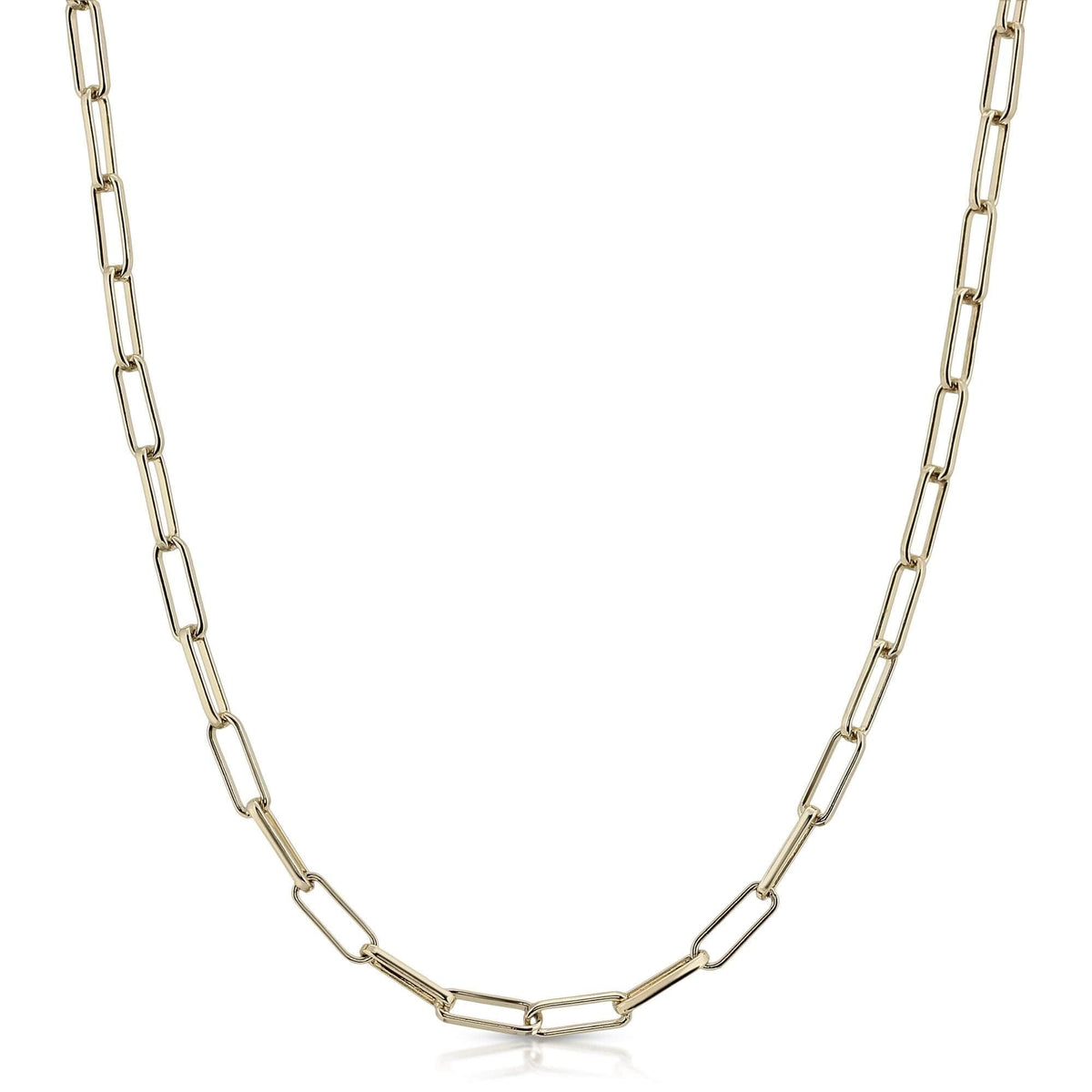
A paperclip chain is made from elongated metal links that resemble the outline of an office paperclip. Each link is noticeably longer than it is wide, with open space at its center. From a distance, the chain reads as a sequence of distinct shapes rather than a dense strand. The links may be softly rounded or more rectangular, and the overall impression can range from quiet to bold depending on their proportions.
The term paperclip describes the appearance of the links, not their material or quality. Paperclip chains can be made using different base metals and finishes. A gold-colored chain is not automatically solid gold; a silver-colored chain is not automatically sterling silver. Those specifications should be checked in the individual listing.
Eklexic's Elongated Link Chain is an example of the paperclip-inspired silhouette. Its open, elongated links give the chain a defined line without requiring a pendant. The product is crafted from recycled brass with 14K gold plating and a protective coating.

The attraction of this shape is its versatility of scale. Choose a finer version if you want a supporting layer, or a more substantial link if you want the chain to carry the look. The outline stays recognizable even as the proportions change.
Paperclip, rectangular and oval links: what is the difference?
These names overlap in everyday jewelry descriptions, so it helps to look at the actual links rather than treat every label as a separate technical category. A paperclip link is generally elongated; its sides may be straighter or more curved. A rectangular link emphasizes length and straighter sides, often with softened corners. An oval link has a more continuous curve and can feel softer against other jewelry shapes.
The important question isn't which name is more fashionable. It is whether you prefer crisp geometry, rounded lines or a mix of both. Also compare the space between links. Two necklaces with the same overall length can have very different visual weight when their individual links are shaped differently.
Elongated links: a clean line with visible space
The Elongated Link Chain keeps the outline narrow and open. Worn on its own against a plain shirt, the individual links give the neckline texture without the extra detail of stones or charms. It also makes a useful starting piece for a personal necklace combination, because the shape is clear and easy to contrast with another type of chain.
Large rectangular links: a stronger silhouette
The Large Rectangle Link Chain emphasizes the rectangular profile with more prominent links. It is made from recycled brass with 14K gold plating. A chain like this can take the place of a separate statement pendant: the geometry is already the focal element. Let the links show rather than burying them beneath a high collar or a second equally substantial chain.

Oval links: a softer alternative
The Oval Link Chain Necklace has smoother oval shapes. This is a useful alternative for someone who likes an open-link necklace but wants less of the straight-edged effect of a rectangular paperclip chain. An oval chain can also create a pleasing contrast beside a crisp shirt collar or a more geometric pendant. Review the specific variant's material and finish before ordering; the shape alone doesn't identify the metal.

None of these styles has a universal advantage in comfort or durability. Link thickness, connection points, finishing and how the necklace fits all affect wear. Compare the actual product photography and specifications before deciding.
How is a paperclip chain different from a curb chain?
A curb chain uses interlocking links arranged to sit relatively flat and close together. A paperclip chain typically leaves more open space within its elongated links. That contrast changes how a necklace looks: curb links create a more continuous band of metal, while paperclip links make the individual shapes more visible.
The Men's Micro Link Curb Chain Necklace shows the difference. Its closely interlocked, Cuban-style links create a compact pattern rather than the open, elongated outline of the Elongated Link Chain. This Eklexic design uses recycled brass with 14K gold or rhodium plating and a protective coating.

For a clean outfit, you can choose either as the only necklace. If you wear them together, the contrast between the open links and the tighter curb pattern can do more for the look than adding another decorative element. Avoid stacking pieces simply because they share a finish; look for a reason each one belongs.
To compare more link styles, browse the chain necklaces collection.
How to choose a paperclip chain necklace
Start with the link shape
Look at a close-up photograph before you look at the model shot. Are the corners rounded? Does the link appear slender and open, or broad and pronounced? Do you prefer every link to be visible from a few feet away? A necklace can be described as a paperclip chain and still look very different from another necklace with that same description.
Then consider where you want it to sit
Think about the necklines you wear most often. If you love open shirts, you may want the chain to sit where the full run of links is visible within the collar. A shorter chain can act as a defined neckline, while a longer version can make the repeated link pattern part of the vertical line of your outfit. There is no universally flattering length: body proportions, garment cut and personal preference change the result.
Check the product's exact available lengths and clasp information rather than relying on a generic necklace-length chart. For example, Eklexic's Elongated Link Chain is offered in multiple lengths, allowing different placements; not every chain offers the same choices.
Decide whether the necklace will stand alone
If you want one piece to wear most days, choose a link shape that you enjoy without anything attached. A pronounced rectangular chain can be a complete look against a black knit or simple white tee. If you're building around a favorite charm, choose a chain that complements the charm's shape and scale rather than overpowering it.
Read the construction and material details
Look for the base metal, plating or solid-metal description, any protective finish, and the clasp design. Material labels are not interchangeable: recycled brass with 14K gold plating is different from solid 14K gold. If a listing has inconsistent material details, clarify them before purchasing. Do not infer composition from the chain's color.
Can you add a charm or pendant to a paperclip chain?
Often, yes, but compatibility matters. The opening in a chain link doesn't automatically mean a charm's clasp, bail or connector will fit through it safely. Check both pieces, including how the connector closes and whether the attachment could rub against the plating or slip free.
If the chain and charm are designed to work together, a single pendant can change an open-link necklace from a standalone chain into a more personal piece. Try choosing a pendant with a different outline: a rounded heart against rectangular links, for example, or a small letter charm on a restrained chain. You don't need several charms to make the combination intentional.
For a more understated result, keep the chain itself as the focal point and place the charm on a separate, finer necklace. That gives both elements their own space. Explore Eklexic charms and pendants for design ideas, while checking individual attachments and availability.
How to wear a paperclip chain necklace with everyday outfits
With a white shirt
Leave the collar open enough for the links to be visible, then choose a single elongated chain. With a polished rectangular link, the shape of the necklace echoes the shirt's clean lines. If you add earrings, keep them simple so the necklace stays the focus.
With a plain crewneck
A chain with larger links creates a visible outline against a solid-color tee or fine knit. Instead of automatically adding a pendant, try the necklace alone first. The open spaces between the links create interest without stones, color or another accessory.
With tailoring
Wear a narrower open-link chain beneath a blazer if you want the jewelry to be a quieter detail. For more presence, choose the Large Rectangle Link Chain with a simple top and let the necklace occupy the open space between the lapels. Pair with one polished ring or cuff rather than repeating oversized links everywhere.
With an evening neckline
A paperclip chain is not restricted to casual dressing. Against an open black dress or simple slip silhouette, its repeated links can be the central design element. You can also contrast it with a refined curb chain; keep the lengths distinct enough that the patterns can be seen, and remove a piece if they crowd one another.
How to layer paperclip chains without losing the shape
The simplest layering question is: what does the second necklace add? If the paperclip chain supplies shape, let another chain add a different texture or placement. A close-set curb chain, a fine cable chain or a pendant can all work, provided you can still see the distinct link outline of the paperclip piece.
Try a shorter chain with a lower open-link necklace, or reverse the arrangement and put the paperclip shape near the neckline. The right order depends on your clothes and how the pieces settle. Closures and chain movement vary, so there is no styling formula that can guarantee necklaces will never twist or touch.
Mixed finishes can also work. A gold-plated elongated chain next to a silver-toned design draws attention to the difference in color as well as texture. Choose that contrast deliberately rather than forcing every necklace to match.
If you need more detailed advice about necklace separation and stacking, see our guide to layering chain necklaces. This article is focused on identifying paperclip links and choosing between link styles, rather than repeating a general layering tutorial.
How to care for open-link and plated chain necklaces
Different materials require different care, so begin with the manufacturer's instructions for the exact necklace you own. For a gold-plated brass chain, keep it away from harsh cleaners, abrasive cloths, perfume and prolonged moisture exposure. Remove it before swimming or strenuous activity, and store it separately from pieces that might scratch the finish.
Open links can catch on loosely knitted fabric or the edges of other jewelry. Fasten and unfasten the clasp gently, rather than pulling the chain apart, and check the link connections periodically. If a link or clasp appears damaged, stop wearing the necklace until it can be assessed.
These habits are about thoughtful handling, not a promise of permanent plating, tarnish-free performance or a particular useful life.
Frequently asked questions
Is a paperclip chain the same as an elongated link chain?
They often describe the same general silhouette. Paperclip refers to the recognizable elongated outline, while elongated link can describe a broader range of long-link chains. Compare photos rather than relying on naming alone.
Are paperclip chains always made from gold?
No. They can use different base metals, solid metals and plated finishes. Check each product's materials section to understand what you're buying.
What is the difference between a paperclip chain and a curb chain?
Paperclip chains typically feature visibly elongated, open links. Curb chains generally have closely interlocking links arranged to lie relatively flat. The contrast is mainly in link shape and density, though individual designs vary.
Should I wear an oval link necklace or a rectangular link necklace?
Choose the line you prefer. Oval links can feel softer and more rounded; rectangular links bring a more defined graphic shape. Both work alone, with different necklines and in carefully considered layers.
Can I wear a paperclip chain with a pendant?
Yes, when the pendant's attachment is compatible with the chain and its closure. Check the clasp or bail dimensions and the manufacturer's guidance. Do not assume every charm will attach directly to every open link.
Can I mix a paperclip chain with other chain styles?
Yes. A tighter curb pattern or fine chain can contrast with open, elongated links. Begin with two pieces in distinct positions, then adjust for comfort and the look you want.
Choose the link, then make it yours
Paperclip chains are recognizable because the shape does the work. Decide whether you want narrow, open links, a bold rectangular line or the softer curve of an oval chain, then place the necklace where you can enjoy those details. The best choice is not the chain with the most complicated styling possibilities; it's the one you reach for when you get dressed.
Explore Eklexic's Elongated Link Chain, Large Rectangle Link Chain, and Oval Link Chain Necklace, or compare their open links with the tighter pattern of the Men's Micro Link Curb Chain Necklace. Each gives the neckline a different point of view.