How to Wear an Ear Cuff: Fit, Placement & Styling
Some jewelry changes an outfit. An ear cuff changes the entire ear stack. It adds a little edge, a little polish and an unexpected point of view—even when the rest of your jewelry is minimal. The best part? Many open-style ear cuffs can be worn without an additional piercing.
If you've ever wondered how to wear an ear cuff, where it should sit, or how to keep it comfortable, this is your guide. From finding the right placement to mixing cuffs with hoops and huggies, a few details make all the difference.
What is an ear cuff?
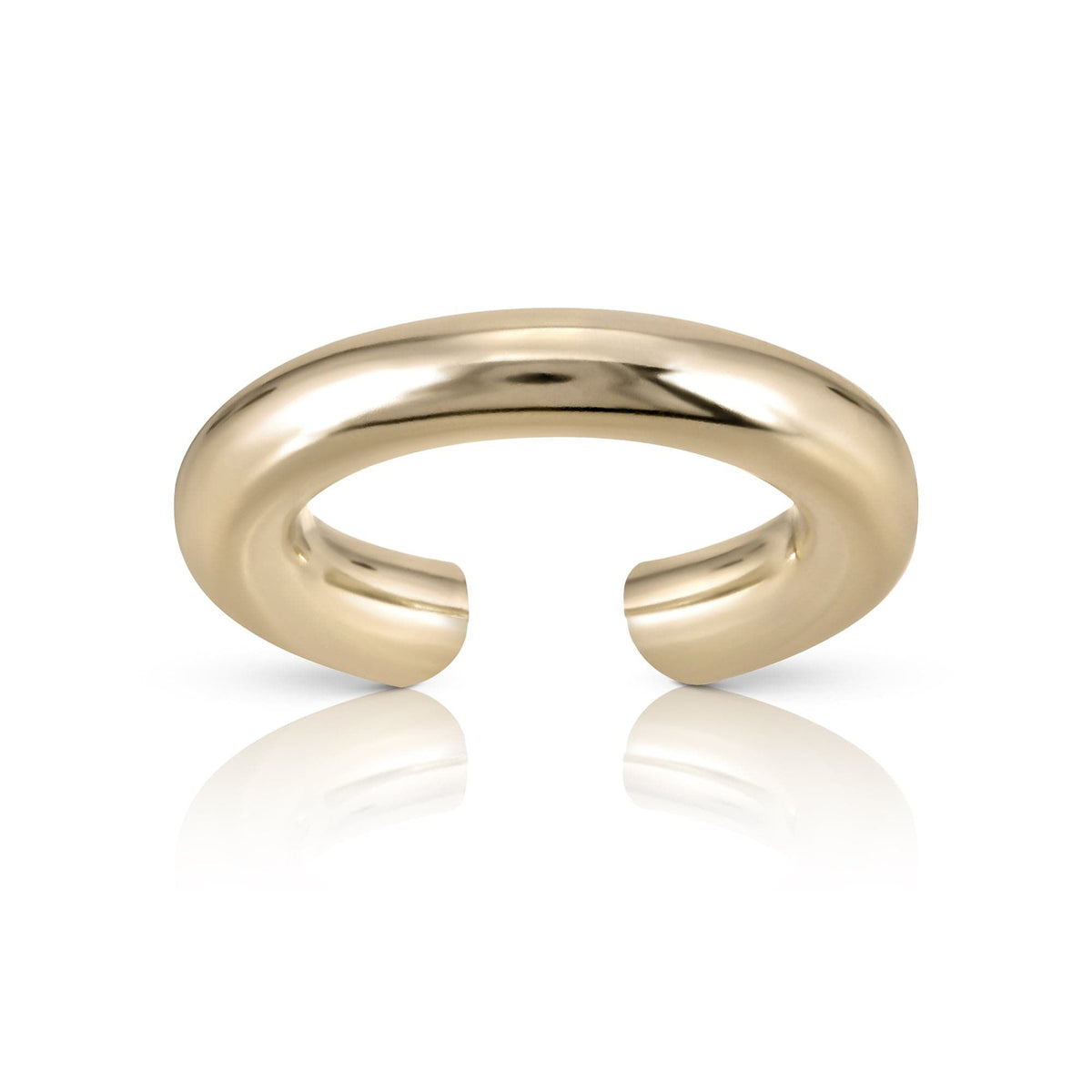
An ear cuff is a piece of jewelry that sits around the outer edge of the ear rather than hanging from the earlobe. Unlike a traditional hoop earring, an open ear cuff generally grips the ear gently through its shape and fit. Designs vary: some are narrow, polished bands; others create the look of two cuffs in one.
That's what makes them so useful for building a more personal look. You can introduce the impression of another piercing without committing to one, change your placement from day to day, or add definition to a stack you already love. As always, check the specific design before purchasing; not every style has the same fit or fastening method.
How to put on an ear cuff: five simple steps
- Find the opening. With an open-style cuff, locate the gap where the ends do not meet. This is the area that slides over the edge of the ear.
- Start where the ear is narrower. Many people find it easiest to place the cuff over the thinner upper edge of the ear rather than trying to push it straight onto the widest part.
- Slide it into position. Move the cuff slowly toward the part of the outer ear where it feels secure. A cuff may sit at the middle of the ear, higher on the cartilage, or slightly lower depending on its design and your anatomy.
- Check the fit. It should feel secure, not tight. Gently move your head or brush your hair back to check that it stays in place.
- Adjust carefully—or reposition. If a flexible design allows minor adjustment, make only the adjustment recommended for that piece. Repeatedly bending plated jewelry can weaken the metal or affect its finish. If the cuff pinches, remove it and try another placement or size.
The goal is a comfortable fit that stays put. Pain, throbbing or a persistent indentation means the cuff is too tight or poorly positioned. Jewelry should never feel like a test of endurance.
Where should an ear cuff sit?
There isn't one universally correct placement. Ear shapes differ, and a cuff that looks right near the upper edge on one ear may feel more secure at mid-ear on another. What matters most is the combination of comfort, stability and the look you want.
Mid-ear: the everyday position
Placed around the middle of the outer ear, a single cuff is visible without competing with your earrings. It's an easy starting point if you've never worn one before. Let the cuff catch the light while everything else stays simple.
Higher on the ear: a sharper line
A higher cuff can bring definition to a minimal earring look. The effect is especially striking with hair tucked behind the ear or pulled back. Don't force a cuff into a position where the ear is too wide or too narrow for it to grip.
With a second cuff: more impact
Two cuffs can add rhythm to the ear without making the stack look crowded. Think in terms of spacing: leave enough room between each piece for their shapes to register. You can also achieve a layered effect with a single double-band design.
Three ways to style an ear cuff
1. The polished, minimal stack
Start with one sleek cuff and a small hoop or stud. Keep the metal finish consistent for a clean look, and let the cuff be the one unexpected detail. The Lisa Ear Cuff is a strong example: a narrow 2.5 mm profile in recycled brass, offered in 14K gold-plated and rhodium-plated finishes.

With a white shirt, knitwear or a simple black top, a single cuff reads deliberate rather than overdone. It's jewelry you notice without having to announce it.
2. The double-band statement
Want more presence without piling on several separate pieces? The Double Ear Cuff creates a layered look with an 8 mm design. Shopify lists it in sterling silver, with 14K gold vermeil and gold-plated sterling-silver options. Because the shape does some of the work, keep your other earrings restrained.

Try the double cuff with a small huggie in the lobe. The contrast in size gives the eye somewhere to land. For more options, explore the hoop earrings collection.
3. A little sparkle, used sparingly
A cuff with a decorative detail can bring light to a stack of polished metal. The Micro CZ Ear Cuff is listed in sterling silver with gold-finish options. Its product details and imagery should guide your choice of finish, while your other earrings can stay simple.
For balance, pair a more detailed cuff with one smooth hoop, or make it your only ear accent. You don't need every piece in a stack to make a statement. Sometimes the restraint is what makes the look work.
Should your ear cuff match your earrings?
Not necessarily. Matching metal finishes can make an ear stack feel cohesive, but mixing gold and silver is just as intentional when there's a clear point of view. One useful approach is to choose a dominant finish and use the second as an accent. Another is to repeat each metal at least once, so the combination feels planned.
Scale matters even more than color. A wide cuff alongside several oversized hoops may compete for attention. A narrow cuff paired with one larger hoop creates contrast. If you're wearing a statement earring, use the cuff to frame it rather than challenge it.
Ear cuff versus huggie: what's the difference?
An ear cuff is designed to sit along the ear's outer edge; many open styles don't need a piercing. A huggie is a small hoop that sits close to the earlobe and usually passes through a piercing. Both can belong in the same look, but they serve different purposes.
If your usual stack feels finished but a little predictable, add a cuff above the lobe. If you want more emphasis near the face, try a polished huggie or hoop. Browse Eklexic ear cuffs to compare shapes before deciding on your next piece.
How to keep an ear cuff in place
Most fit issues come down to placement, anatomy or the cuff's opening—not a lack of effort. A secure cuff should stay in position during ordinary movement, but it shouldn't squeeze. If it slips, try another spot along the ear's edge. If it hurts, take it off. A different design may suit your ear better.
Take your cuff off before sleeping, swimming or activities where it could be caught or pulled. Put it on after applying hair products, perfume and lotions, and wipe it gently with a soft, dry cloth after wearing. Follow the specific care instructions for your piece; gold plating, rhodium and sterling-silver foundations can require different care.
Common ear-cuff mistakes to avoid
- Forcing it on: If the opening doesn't pass comfortably over the ear, don't push it.
- Wearing it too tightly: Secure should never mean painful.
- Bending it repeatedly: Frequent reshaping can stress the metal and plating.
- Overcrowding the stack: Leave space so each design has a purpose.
- Ignoring the product details: Check materials, available finishes and fit guidance before ordering.
Ear cuff FAQs
Can you wear an ear cuff without a piercing?
Yes, many open ear cuffs are made to grip the outer ear without going through a piercing. Check the individual design before purchasing; some ear jewelry combines a cuff look with a pierced component.
Does an ear cuff go on the left or right ear?
Many designs can be styled on either ear, though fit and orientation vary. The best side is the one that feels comfortable and works with your other jewelry. Confirm any left/right specification on the product page.
Should I wear one ear cuff or two?
Both work. One cuff can make a clean, asymmetrical statement. Two can feel more graphic, particularly when the widths differ. Start with one and add only if the look benefits from it.
Can I wear ear cuffs every day?
If a cuff fits comfortably and its materials work for you, it can become part of your regular jewelry rotation. Remove it if it irritates the skin, and avoid sleeping in it or wearing it during activities where it might snag.
The detail that changes the whole stack
You don't need a new piercing—or an entirely new jewelry collection—to change your look. Sometimes one cuff is enough. Wear it with a clean huggie, give a double-band design the spotlight, or mix metals in a way that feels entirely your own. The point isn't to follow a formula. It's to make the stack yours.
Explore Eklexic Ear Cuffs and find the piece that adds a little more you.